Ornamental Cross Earring Laser Cut: A Guide to Gothic Religious Design and Precision Craft
In the realm of modern jewelry making, the intersection of traditional symbolism and advanced manufacturing technology has created a vibrant new niche. The Ornamental Cross Earring Laser Cut design exemplifies this fusion, offering creators a pathway to produce intricate, faith-based accessories with unprecedented precision. Unlike mass-produced items found in retail chains, these designs allow for a level of detail that honors the complexity of gothic religious aesthetics while remaining practical for small-batch production and custom orders. Whether you are a seasoned laser cutter or a hobbyist exploring digital fabrication, understanding the nuances of this specific design category is essential for achieving professional results.
The Intersection of Gothic Aesthetics and Spiritual Symbolism
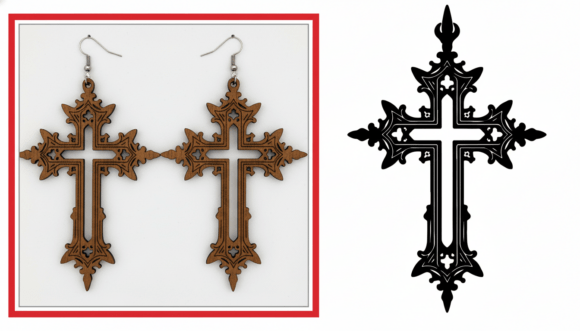
The appeal of the ornamental cross extends far beyond its function as a simple earring; it serves as a wearable statement of identity and belief. The specific style known as "gothic" within this context draws heavily from architectural elements found in medieval cathedrals, characterized by pointed arches, ribbed vaults, and elaborate tracery. When translated into a two-dimensional vector format for laser cutting, these architectural motifs become delicate lace-like patterns that define the silhouette of the cross.
This design philosophy prioritizes negative space—the areas where material is removed—as much as the solid lines that remain. In an Ornamental Cross Earring Laser Cut project, the interplay between the void and the substance creates a sense of lightness and airiness, even when working with denser materials like wood or thick acrylic. The intricate patterns often include floral vines, geometric borders, and filigree details that would be nearly impossible to replicate using manual sawing or stamping techniques. This capability allows the creator to embed deep spiritual meaning into every curve and line, transforming a standard accessory into a piece of art that resonates with themes of eternity and devotion.
Design Elements That Define the Style
To truly appreciate the utility of these files, one must examine the specific characteristics that make them effective. The primary feature is the use of clean, continuous lines. In laser cutting, continuity is paramount; broken lines can lead to jagged edges or structural failures in the final product. High-quality vector artwork ensures that the laser head follows a smooth path, resulting in a polished finish that requires minimal post-processing. Furthermore, the decorative nature of the gothic cross often involves symmetrical balancing, which not only pleases the eye but also ensures that the earrings hang correctly when worn.
The detailing in these designs is another critical factor. While some might assume that more detail equals better quality, in laser cutting, there is a fine line between intricacy and fragility. A well-engineered Ornamental Cross Earring Laser Cut Design maintains structural integrity despite its delicate appearance. The thickness of the lines is calculated to withstand the heat of the laser without burning away, yet remains thin enough to capture the elegance of the gothic style. This balance is what separates professional-grade vector files from amateur sketches, ensuring that the final jewelry pieces are durable enough for daily wear.
Material Selection and Its Impact on the Final Product
One of the most significant advantages of utilizing a digital file for jewelry creation is the versatility of material application. The same vector file used for an Ornamental Cross Earring Laser Cut can be adapted to various substrates, each offering a unique aesthetic and tactile experience. Understanding how different materials react to the laser beam is crucial for maximizing the potential of the design.
- Basswood and Plywood: These are popular choices for a rustic, organic look. The laser burns the edges slightly, creating a natural contrast against the raw wood grain. For religious accessories, this earthy tone often complements the spiritual theme, evoking a sense of tradition and handcrafted warmth. However, care must be taken to adjust power settings to prevent charring that could obscure the intricate gothic details.
- Acrylic (PMMA): Acrylic offers a sleek, modern alternative. When cut, the edges of clear or colored acrylic polish themselves under the laser, resulting in a glass-like finish. This material is particularly effective for the ornamental cross design because the transparency allows light to pass through the openwork patterns, creating a glowing effect when held up to the sun. It is ideal for creating lightweight earrings that feel substantial yet elegant.
- Metal Foils and Thin Sheets: For those looking to create high-end metal jewelry, some laser systems can etch or cut thin brass, copper, or silver sheets. The ornamental cross pattern translates beautifully into metal, offering a permanent, tarnish-resistant option that aligns with the timeless nature of the symbol.
The choice of material ultimately dictates the workflow. Wood may require sanding and sealing after cutting, whereas acrylic might need edge polishing if the machine settings were not perfect. By selecting the appropriate substrate, creators can tailor the final product to match the specific needs of their target audience, whether they are selling to a boutique market or crafting personal gifts.
Technical Workflow: From Digital File to Physical Jewelry
The transition from a digital concept to a tangible object relies heavily on the compatibility and quality of the file formats provided. A robust Ornamental Cross Earring Laser Cut package typically includes multiple file types to accommodate various software ecosystems. The inclusion of DXF, EPS, SVG, and PDF formats ensures that the design is accessible regardless of the machinery or design software being used.
Understanding File Formats for Precision Cutting
The DXF (Drawing Exchange Format) is often the preferred choice for CNC machines and industrial laser cutters due to its precise coordinate system. It preserves the exact dimensions and line weights necessary for accurate cutting. For users operating consumer-grade devices like Cricut or Glowforge, the SVG (Scalable Vector Graphics) format is indispensable. SVG files are web-friendly and easily manipulated in design software, allowing users to resize the cross earrings without losing resolution. This scalability is vital when adjusting the design to fit different earlobe sizes or to create matching pendants.
The EPS (Encapsulated PostScript) format serves professionals who need to edit the vector paths extensively before cutting. It allows for the modification of individual nodes, enabling the addition of custom text or the alteration of specific decorative elements. Finally, the PDF file acts as a reliable preview tool, ensuring that the user can visualize the layout and dimensions before committing to the cutting process. Having access to these varied formats streamlines the workflow, reducing the time spent on file conversion and troubleshooting.
Applications Beyond Earrings: Expanding the Creative Scope
While the primary focus of the Ornamental Cross Earring Laser Cut design is jewelry, the versatility of the vector art opens doors to a wide array of other applications. The intricate gothic patterns are equally effective when scaled up for home decor or scaled down for miniature crafts. This adaptability makes the design a valuable asset for creators looking to diversify their product lines without investing in new design assets.
For instance, the same cross motif can be used to create wall hangings, bookmarks, or ornaments for religious holidays. In a woodworking context, the design can serve as a template for inlay work, where the laser-cut cross is set into a larger wooden panel. Additionally, educators and researchers in the field of religious studies or art history might utilize these designs for teaching aids, demonstrating the evolution of gothic architecture through simplified, wearable forms. The ability to repurpose a single design across multiple categories enhances its value and provides a sustainable approach to creative business models.
Customization and Personalization Opportunities
In today's market, personalization is a key driver of sales. The clean lines and modular nature of the ornamental cross design make it an excellent candidate for customization. Creators can easily add names, dates, or short scripture verses to the design using vector editing software. This capability transforms a generic accessory into a deeply personal gift, such as a confirmation present, a wedding favor, or a memorial token. The flexibility of the digital file empowers makers to respond quickly to customer requests, fostering a stronger connection between the artisan and the end-user.
Considerations for Professional Implementation
When integrating the Ornamental Cross Earring Laser Cut design into a professional workflow, several factors must be considered to ensure consistency and quality. First, calibration of the laser machine is critical. Different materials require specific power and speed settings to achieve the desired depth and edge finish. Running test cuts on scrap material before processing the final batch is a best practice that prevents waste and ensures the intricate details remain intact.
Secondly, attention must be paid to the finishing touches. Depending on the material, the cut edges may have slight residue or roughness. Sanding, buffing, or applying a sealant can elevate the perceived value of the product. For acrylic, flame polishing or tumbling can restore clarity to the edges, while wood may benefit from a coat of varnish or oil to protect the grain and enhance the color. These post-processing steps are what distinguish a handmade luxury item from a rough prototype.
Finally, understanding the legal and ethical implications of using digital downloads is important. Since this is a digital product, no physical item is shipped, and the responsibility lies with the user to adhere to licensing agreements regarding commercial use. Respecting intellectual property rights ensures a healthy ecosystem for digital creators and allows for the continued development of high-quality resources like the gothic religious SVG designs.
Conclusion on Design Versatility and Market Potential
The Ornamental Cross Earring Laser Cut represents more than just a trend in jewelry; it is a testament to the enduring power of symbolic art combined with modern technology. By leveraging detailed vector files, creators can produce elegant, meaningful accessories that resonate with a broad audience seeking both style and substance. The combination of gothic aesthetics, spiritual significance, and technical precision offers a unique opportunity for artisans to express creativity while meeting the demands of a discerning market. As the capabilities of laser cutting technology continue to evolve, the potential for innovation in this niche remains vast, inviting designers to explore new materials, finishes, and applications for this timeless motif.