300 Teacup Stamps: A Comprehensive Guide to Integrating Vintage Digital Assets into Creative Workflows
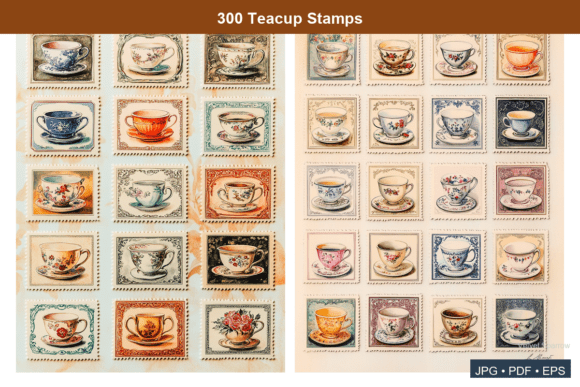
In the realm of digital scrapbooking, junk journaling, and mixed media art, the quality of your ephemera often dictates the final aesthetic of a project. The 300 Teacup Stamps collection represents a significant resource for creators seeking to infuse their work with antique charm and historical texture. This digital asset library is not merely a set of images; it is a structured toolkit designed to streamline the creation of vintage-themed layouts. By offering 300 individual teacup illustrations across 20 coordinated sheets, this collection addresses the common bottleneck of finding consistent, high-quality elements that match a specific theme.
For professionals and hobbyists alike, the integration of such a large-scale asset pack requires a strategic approach. Whether you are designing physical journals, creating digital planners, or producing print-on-demand products, understanding how to deploy these stamps effectively can transform a standard layout into a cohesive narrative piece. The following guide explores the practical implementation of these assets within various creative workflows.
Understanding the Asset Structure and File Compatibility
Before integrating any digital resource into a production pipeline, it is essential to understand its technical specifications. The 300 Vintage Teacup Postage Stamps collection is delivered in multiple formats to ensure compatibility with a wide range of software environments. The inclusion of high-resolution JPG files allows for immediate use in raster-based programs like Adobe Photoshop or Canva. However, the presence of EPS (Encapsulated PostScript) files is a critical feature for advanced users. These vector-compatible files enable flexible resizing without the loss of clarity, which is vital when scaling elements for large-format prints or detailed close-ups.
The collection also provides a print-ready PDF file, simplifying the workflow for those who prefer to cut physical paper directly from printed sheets. This multi-format delivery system ensures that the asset fits seamlessly into both digital-first and hybrid physical-digital workflows. For a creator managing a tight deadline, having access to pre-sized grids eliminates the need for time-consuming manual alignment, allowing for faster execution of design tasks.
Pre-Production Planning and Theme Development
Effective use of the 300 Teacup Stamps begins during the planning phase of a project. Before opening design software, creators should define the visual language of their intended output. Since these stamps feature an antique vintage aesthetic with ornate frames and soft parchment backgrounds, they are best suited for projects requiring a sense of nostalgia, history, or "cottagecore" elegance.
When planning a junk journal or a scrapbook album, consider how these stamps will interact with other materials. Will they serve as focal points, or will they be used as background texture? Because the set includes 20 coordinated sheets, there is a natural rhythm to the color palette and border styles. This consistency is invaluable for maintaining brand identity in commercial projects or ensuring visual harmony in personal albums. During the preparation stage, creators can map out where specific teacup designs will appear, perhaps reserving the more intricate porcelain illustrations for key pages and using simpler designs for filler elements.
Implementation Strategies for Physical Crafts
For artisans working with physical media, the transition from digital file to tangible object is a crucial step. The 300 Teacup Stamps are arranged in clean, cut-friendly grids, a design choice that significantly enhances efficiency. When printing the PDF version on cardstock or heavy-weight paper, the grid lines provide clear guides for cutting tools. Creators can utilize fussy cutting techniques to isolate individual stamps, preserving the ornate borders for a finished look, or they can cut along the grid lines to create uniform postage-style squares.
This flexibility supports various crafting methods. In collage art, the stamps can be layered over textured papers, washi tape, or fabric scraps to add depth. The soft parchment background of the stamps blends naturally with aged paper, reducing the need for additional distressing techniques. Furthermore, the ability to print whole sheets means that entire pages can be repurposed as decorative journal inserts, saving time on assembly while maximizing the utility of the digital download.
Digital Integration and Workflow Efficiency
In digital workflows, the 300 Teacup Stamps function as versatile layers within design software. The high resolution of the JPG files ensures that even when zoomed in for detailed editing, the image quality remains sharp. Designers can manipulate opacity, blend modes, and layer effects to make the stamps appear as if they were physically adhered to the page. For instance, applying a slight drop shadow or adjusting the saturation can help the digital stamp integrate with scanned photographs or hand-lettered text.
The EPS files offer an additional layer of control for professional designers. These files allow for the extraction of the teacup illustration from its frame, enabling custom framing or placement within complex layouts. This is particularly useful for marketing materials, blog headers, or social media graphics where a unique composition is required. By leveraging the vector capabilities, creators can maintain crisp edges regardless of the final output size, ensuring professional quality across all platforms.
Organizing and Managing Large Digital Libraries
Managing a collection of 300 individual assets requires a disciplined organizational strategy. Without a systematic approach, locating a specific teacup design among hundreds of options can become inefficient. It is advisable to categorize the files based on color palette, pattern complexity, or intended use immediately upon downloading. Many creators find it helpful to create sub-folders for "Focal Points," "Backgrounds," and "Accents" to streamline the selection process during active design sessions.
Furthermore, tagging or naming conventions can enhance searchability within digital asset management systems. Since the collection features a variety of teacup styles inspired by classic tea culture and old-world ephemera, descriptive filenames can save valuable time. For example, distinguishing between "floral-porcelain-teacup" and "solid-gold-rim-teacup" allows for rapid retrieval when a specific visual element is needed to complete a design.
Quality Control and Consistency in Output
Maintaining consistency is a hallmark of professional design work. The 300 Vintage Teacup Postage Stamps collection aids in this goal by providing a unified style across all 20 sheets. However, creators must still exercise quality control when mixing these digital assets with other elements. Ensuring that the resolution of accompanying photos matches the high-definition quality of the stamps is essential to prevent visual dissonance.
Color calibration is another factor to consider. While the soft, timeless color palettes of the stamps are designed to be cohesive, different monitors and printers may render colors differently. Conducting test prints before committing to a full run of physical projects helps verify that the parchment tones and ink details appear as expected. This step minimizes waste and ensures the final product meets the desired aesthetic standards.
Long-Term Utility and Project Scalability
The true value of the 300 Teacup Stamps lies in its long-term utility. Unlike single-use clipart, this extensive collection supports a wide array of future projects. As trends in design evolve, the vintage aesthetic remains a staple in many creative niches, from wedding invitations to educational materials. Having a robust library of themed assets allows creators to scale their operations, taking on larger commissions or producing series of related content without starting from scratch each time.
For small business owners and entrepreneurs, this scalability translates to increased productivity. The ability to quickly assemble a vintage-themed planner, a set of greeting cards, or a series of social media posts using a pre-existing asset library reduces overhead costs and accelerates time-to-market. Additionally, the versatility of the files means they can be repurposed across different mediums, maximizing the return on investment for the initial purchase.
Conclusion on Strategic Asset Utilization
The 300 Teacup Stamps collection is more than a decorative addition; it is a functional component of a well-oiled creative process. By understanding the technical specifications, planning thematic integration, and employing efficient organization strategies, creators can leverage these assets to produce high-quality, cohesive work. Whether for personal expression or commercial application, the thoughtful implementation of these vintage teacup designs enhances the overall impact of any project, bridging the gap between historical inspiration and modern digital execution.