Japanese Childrens Bookmarks: A Practical Evaluation
For parents, educators, and young readers alike, the selection of reading accessories often goes beyond mere utility. Japanese Childrens Bookmarks represent a specific niche within the broader category of page markers, blending cultural aesthetics with functional design. These items are not simply strips of paper; they serve as visual anchors that can transform the reading experience for children. Whether sourced as physical products or acquired as printable digital files, these bookmarks offer a unique intersection of art, culture, and literacy support. Understanding their value requires looking at their design origins, practical applications, and how they compare to other reading aids.
Defining the Category and Design Origins
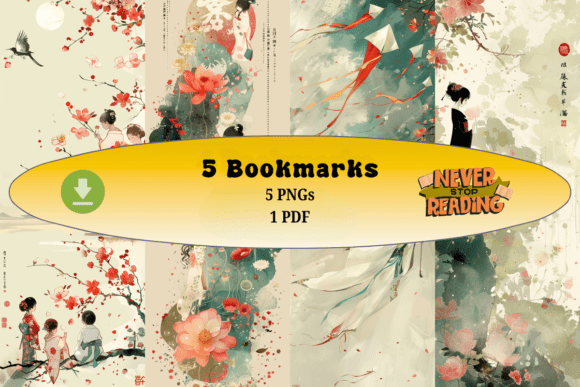
Japanese Childrens Bookmarks typically feature motifs inspired by Japanese folklore, nature, and modern pop culture. Unlike generic bookmarks that may rely on simple geometric shapes or standard cartoon characters, this category often incorporates elements such as koi fish, cherry blossoms (sakura), traditional patterns like seigaiha (wave patterns), and whimsical creatures from anime or manga. The aesthetic is frequently characterized by vibrant colors, intricate line work, and a balance between playful imagery and serene botanical illustrations.
When evaluating these items, particularly in the context of printable sets, one must consider the resolution and format. High-quality designs are usually provided in JPG formats with dimensions optimized for standard cardstock, such as 2 × 6 inches or 2.5 × 7 inches. The artistic style ranges from vintage florals to modern patterns, ensuring there is a visual language that appeals to various age groups. This diversity allows the bookmark to function as both a tool for marking a page and a small piece of decorative art that a child might display or share.
Reasons for Interest and Engagement
Several factors drive interest in Japanese Childrens Bookmarks. Primarily, they serve as an engaging way to introduce cultural elements into a child's daily routine. For parents and teachers aiming to diversify the materials available to students, these bookmarks provide a subtle introduction to Japanese art forms without requiring a formal lesson plan. The visual appeal can also act as an incentive for reluctant readers. If a child feels a sense of ownership over a beautifully designed page marker, they may be more inclined to pick up a book.
Furthermore, the versatility of printable versions makes them attractive for bulk usage. Educators often need multiple copies for classroom libraries or student gifts. The ability to print multiple bookmarks per sheet reduces waste and cost compared to purchasing individual physical units. Additionally, the customization potential—such as adding tassels, ribbons, or charms—allows users to tailor the item to specific themes, making it suitable for events like library donations, party favors, or teacher appreciation gifts.
Benefits, Tradeoffs, and Considerations
The primary benefit of utilizing Japanese Childrens Bookmarks, especially printable versions, is the balance between cost-effectiveness and aesthetic quality. By printing on heavyweight cardstock (110lb or higher) and laminating, users can create durable items that rival store-bought equivalents. This DIY approach offers full control over the final product, allowing for adjustments in size or the addition of personal touches like hole-punching for tassel attachment.
However, there are tradeoffs to consider. The quality of the final product is heavily dependent on the user's equipment. Colors may vary significantly based on the printer model and ink type used. A design that appears vibrant on a screen might look muted if printed on standard office paper or with low-yield cartridges. Furthermore, while the initial cost of digital downloads is low, the time investment required for printing, cutting, and potentially laminating must be factored in. For those who require hundreds of bookmarks immediately, the manual labor involved in processing printable files may outweigh the financial savings.
Durability is another critical consideration. Without lamination, paper bookmarks can easily tear, bend, or absorb moisture, rendering them useless after a few weeks of use. While the designs are crafted to be functional, the longevity relies entirely on the finishing process chosen by the user. In contrast, pre-made plastic or metal bookmarks offer immediate durability but lack the customizable charm of the printable variety.
Situations Where They Are a Strong Fit
Japanese Childrens Bookmarks are an excellent fit for several specific scenarios. In educational settings, they serve as effective rewards or incentives for reading goals. Their distinct visual style helps them stand out among standard school supplies, making them memorable tokens of achievement. They are also well-suited for craft fairs and small business ventures where handmade, personalized items are in demand. The ability to produce sets with consistent theming allows sellers to create cohesive gift bundles.
They are also ideal for subscription box inserts or planner accessories where a touch of whimsy is desired. For families interested in cultural education, these bookmarks provide a conversation starter about Japanese traditions and art. Additionally, for book clubs or library donation drives, these items add a layer of care and thoughtfulness that mass-produced alternatives often lack. The option to print as many times as needed for personal use or small business needs ensures scalability for these specific use cases.
When Alternatives May Be Worth Considering
Despite their appeal, there are situations where alternatives to Japanese Childrens Bookmarks might be more appropriate. If a reader requires extreme durability for outdoor use or rough handling, metal or silicone bookmarks would be superior choices. Paper-based solutions, even when laminated, have limits regarding water resistance and flexibility. Similarly, if the goal is to minimize environmental impact and the user lacks access to eco-friendly cardstock or biodegradable laminating sheets, reusable fabric bookmarks might be a more sustainable option.
Time constraints are another factor. For individuals who need a single bookmark immediately and do not wish to engage in the printing and cutting process, purchasing a pre-made item is more efficient. Additionally, if the target audience has specific accessibility needs, such as requiring high-contrast text or tactile features that cannot be easily replicated through standard printing, specialized adaptive bookmarks would be the better choice.
Practical Decision-Making Insights
Deciding whether to invest in Japanese Childrens Bookmarks involves weighing the desire for aesthetic customization against the effort required to produce them. Users should first assess their printing capabilities. Do you have access to a color printer capable of high-resolution output? Is there a source for heavy cardstock and lamination supplies? If the answer is yes, the printable route offers significant value and creative freedom.
Consider the intended recipient. For young children who appreciate bright colors and recognizable characters, the thematic designs found in these sets are highly effective. However, for older students or adults who prefer minimalism, a simpler design might be more aligned with their tastes. It is also important to verify the licensing terms of any digital download. Most printable sets allow for personal use and small business sales, but restrictions may apply to large-scale commercial reproduction.
Ultimately, the decision rests on the balance between functionality and presentation. Japanese Childrens Bookmarks offer a compelling solution for those who view reading accessories as an extension of personal style and a tool for engagement. By understanding the requirements for production and the specific contexts in which they excel, readers and educators can make informed choices that enhance the reading experience.