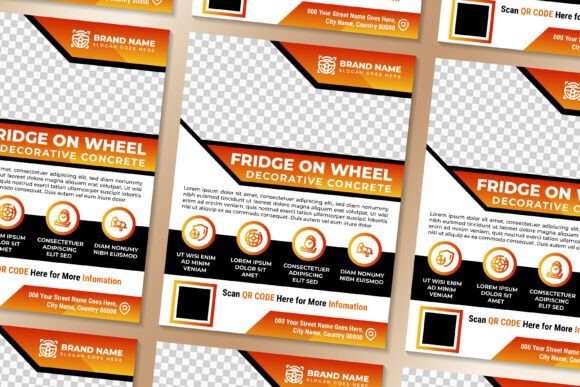
Fridge on Wheel Vertical Flyer: A Smart Design Tool for Dynamic Visual Communication
The Fridge on Wheel Vertical Flyer is more than just a design template—it’s a versatile solution for professionals and creators who want to present information in a visually engaging and organized way. Whether you're promoting a product, sharing technical details, or designing marketing materials, this flyer template offers a clean, modern layout that supports both creativity and clarity. Built with vector graphics and optimized for high-resolution output, it gives users the flexibility to customize visuals without compromising quality.
Why People Choose the Fridge on Wheel Vertical Flyer
One of the main attractions of the Fridge on Wheel Vertical Flyer is its adaptability. The vertical layout makes it ideal for posters, infographics, and promotional materials that need to stand out in both digital and print formats. Its design includes designated spaces for photos, icons, and text, allowing users to build a cohesive visual narrative without clutter. Since all elements are 100% vector-based, resizing or adjusting graphics doesn’t lead to pixelation or distortion—a major advantage for designers and marketers alike.
This template is especially popular among small business owners, educators, and entrepreneurs who need professional-grade materials without the overhead of hiring a designer from scratch. With included file formats like AI, EPS, JPG, and SVG, it’s compatible with a wide range of design software, making it accessible to both beginners and experienced creators.
Common Mistakes When Using the Fridge on Wheel Vertical Flyer
Despite its many benefits, even the best design tools can fall short when used incorrectly. Here are some common missteps users make when working with the Fridge on Wheel Vertical Flyer, and how to avoid them:
1. Overloading the Layout with Too Much Content
One of the most frequent issues is trying to fit too much information into the available space. While the template offers multiple zones for text and visuals, overcrowding can make the design feel chaotic and hard to read. This is especially problematic for printed flyers, where legibility is crucial.
Better approach: Prioritize clarity over density. Use bullet points, short paragraphs, and visual hierarchy to guide the viewer’s eye. If needed, split content across multiple pages or use the template for a focused message rather than an all-in-one document.
2. Ignoring Color Consistency
The template allows full color editing, which is a strength—but also a potential pitfall. Users sometimes choose clashing color schemes or use too many hues, which can distract from the main message or make the design look unprofessional.
Better approach: Stick to a consistent color palette—ideally 2–3 primary colors with neutral accents. Use tools like Adobe Color or Coolors to find harmonious combinations that enhance readability and visual appeal.
3. Not Optimizing for Print Resolution
While the Fridge on Wheel Vertical Flyer is designed at 300dpi for print quality, some users mistakenly export or save the file in lower-resolution formats, especially when converting from SVG or AI to JPG. This can result in blurry images or pixelated text when printed.
Better approach: Always double-check your export settings before finalizing the file. If you're saving as JPG or PNG, ensure the resolution is set to 300dpi and the image dimensions match your print size. For best results, use the EPS or AI files directly when sending to a professional printer.
4. Misusing Vector Graphics
Although all graphics are vector-based, not all users are familiar with how to scale and edit them effectively. Some may stretch elements out of proportion or apply effects that distort the original design.
Better approach: Use the “Scale” tool with the “Constrain Proportions” option enabled to maintain the integrity of icons and illustrations. Avoid applying excessive filters or gradients unless you're confident they won’t interfere with the template’s clean aesthetic.
What to Check Before Downloading or Using the Template
Before you commit to using the Fridge on Wheel Vertical Flyer, take a few moments to verify the following:
- Software compatibility: Ensure your design software supports AI, EPS, or SVG files if you plan to edit vector elements.
- File resolution: Confirm that the JPG version (if included) is indeed 300dpi and suitable for print.
- Layer organization: Check that the layers are clearly labeled and grouped, making it easier to edit specific sections without disrupting the overall layout.
- Font licensing: If the template uses specific fonts, verify whether they are free for commercial use or require a license.
Maximizing the Value of Your Design
One of the biggest advantages of the Fridge on Wheel Vertical Flyer is its reusability. Once you’ve customized it for one project, you can easily adapt it for future use by changing text, images, or color schemes. This makes it a cost-effective option for businesses or individuals who regularly need to produce marketing or informational materials.
To get the most out of the template, consider creating a branded version—adjusting colors, fonts, and layout elements to match your brand identity. This way, you can maintain a consistent visual style across all your communications without starting from scratch every time.
Final Thoughts
The Fridge on Wheel Vertical Flyer is a powerful tool when used thoughtfully. By understanding its features and avoiding common design pitfalls, you can create professional, eye-catching materials that communicate your message clearly and effectively. Whether you're a small business owner looking to promote a product or a marketer designing an infographic, this template offers a solid foundation for your creative projects.
As with any design resource, the key lies in how you use it. Take the time to explore its features, test different layouts, and make adjustments that align with your goals. With a little planning and attention to detail, you’ll be able to produce polished, high-quality content that stands out—both online and in print.