Blue Rose Teapot Floral Pattern Design: A Versatile Asset for Creative and Commercial Projects
The Blue Rose Teapot Floral Pattern Design is a richly layered surface pattern that blends vintage botanical elegance with a whimsical, feminine aesthetic. Its painterly style, oversized blue peony-roses, and intricate botanical motifs make it ideal for a wide range of creative applications—from fabric printing to digital design. Whether you're a professional designer, an entrepreneur launching a product line, or a hobbyist working on a personal project, this pattern offers both visual appeal and functional flexibility.
Understanding the Design and Its Context
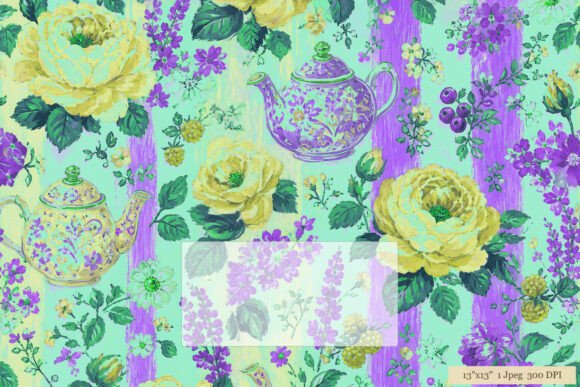
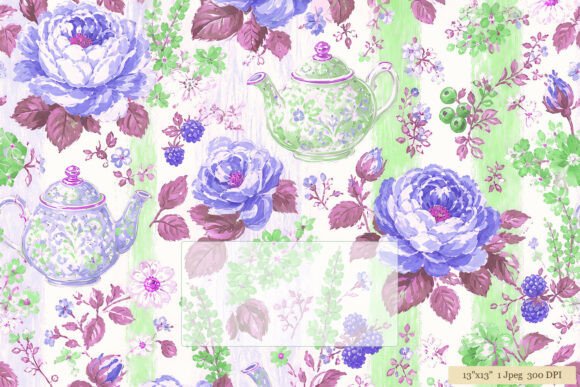
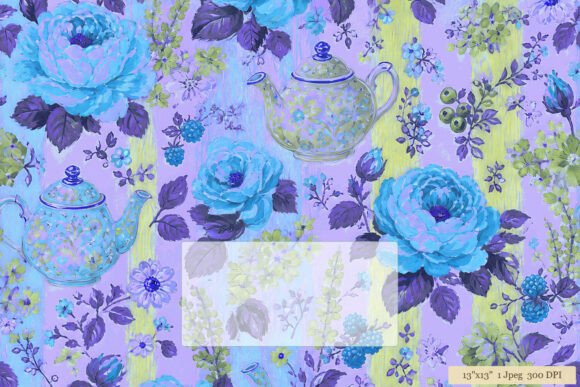
This 300 DPI, 13x13 inch pattern features a soft background of alternating lavender-lilac and muted chartreuse stripes. Over this base bloom oversized cyan and cornflower blue peony-roses, rendered in a gouache-inspired style. Delicate ceramic teapots with green floral motifs, blackberries, daisies, and trailing sprigs are scattered throughout, enhancing the vintage English garden feel. The color palette—sky blue, turquoise, deep violet-purple, sage green, chartreuse, and soft lavender—creates a dreamy, timeless mood.
The Blue Rose Teapot Floral Pattern Design fits naturally into workflows that involve visual storytelling, brand identity, product design, or themed content creation. It can be used as a foundational element or a complementary accent, depending on the project’s scope and goals.
Applications Before the Creative Process
Before diving into a new design project, it's essential to gather visual inspiration and define a cohesive theme. The Blue Rose Teapot Floral Pattern Design can be used during the planning phase to establish a color scheme, mood board, or overall aesthetic direction. Its painterly quality and soft color palette make it ideal for projects centered around tea parties, garden themes, or vintage-inspired branding.
- Use it as a background in mood boards created in Canva or Photoshop to set the tone for a project.
- Incorporate it into Pinterest boards to communicate style preferences to clients or collaborators.
- Print it as a reference swatch for fabric or product mockups in early-stage prototyping.
Its compatibility with digital tools like Procreate, Canva, and Adobe Illustrator allows for seamless integration into early-stage ideation and concept development.
Integration During the Design Workflow
During the active design phase, the Blue Rose Teapot Floral Pattern Design can serve as a reusable asset across multiple platforms and mediums. Its high resolution and adaptable color palette make it suitable for both print and digital use.
For example, if you're designing a line of tea-themed stationery or gift wrap, this pattern can be applied directly as a background or used to fill specific elements like envelope liners or planner covers. Its 13x13 inch format is ideal for Spoonflower, Printify, or Contrado fabric printing, allowing for easy customization of tote bags, cushions, or aprons.
Designers working in Procreate can use the pattern as a fill texture for illustrations or backgrounds. In Canva, it can be layered behind text or icons to create depth and visual interest in social media graphics or blog headers.
Practical Implementation Tips
- For fabric printing, ensure the pattern repeats cleanly if scaling beyond the original 13x13 dimensions.
- Use clipping masks in Photoshop or Illustrator to apply the pattern selectively to specific shapes or text elements.
- Pair it with neutral fonts and minimal text for a clean, vintage-inspired layout.
- Adjust contrast and saturation slightly if using on darker backgrounds to maintain visibility.
Post-Production and Long-Term Use
Once a project is complete, the Blue Rose Teapot Floral Pattern Design can be archived as part of a reusable design library. Organizing it with clear naming conventions and metadata will help streamline future use, especially for businesses or creatives who frequently work with themed content.
For entrepreneurs using platforms like Etsy or Shopify, this pattern can become part of a branded visual identity. It can be reused across product packaging, thank-you cards, and digital downloads, creating a consistent look that customers will recognize and associate with your brand.
When planning long-term use, consider the following:
- Store the file in a central asset management system with tags like "vintage," "floral," "tea-themed," and "botanical."
- Create variations by adjusting color balance or isolating specific elements like teapots or berry clusters.
- Test the pattern across different product types (e.g., mugs, notebooks, fabric swatches) to assess versatility.
Compatibility and Workflow Integration
One of the strengths of the Blue Rose Teapot Floral Pattern Design is its compatibility with a wide range of tools and platforms. Whether you're a digital artist, a print-on-demand seller, or a content creator, this pattern integrates smoothly into existing workflows.
- Printify / Spoonflower: Upload directly for fabric, pillow, or mug printing.
- Canva: Use as a background or overlay element in social media templates, invitations, or planner layouts.
- Procreate: Import as a texture layer for digital illustrations or scrapbook pages.
- Adobe Creative Suite: Apply as a seamless pattern fill in Illustrator or Photoshop projects.
For teams or remote collaborators, sharing the pattern via cloud storage with linked permissions ensures everyone has access to the same high-quality file, reducing inconsistencies in output.
Use in Business and Marketing Strategies
Business owners and marketers can leverage the Blue Rose Teapot Floral Pattern Design to support seasonal campaigns, product launches, or themed promotions. It works especially well for brands in the wellness, lifestyle, or artisanal product niches.
Consider the following applications:
- Create limited-edition tea-themed packaging using the pattern for a boutique feel.
- Use it in email newsletters or landing pages to support a spring or summer marketing campaign.
- Design branded merchandise like tote bags or notebooks for trade show giveaways.
Because of its soft, feminine aesthetic, it’s particularly effective for targeting audiences who appreciate vintage charm, botanical illustration, and curated aesthetics.
Conclusion: A Pattern That Works With You
The Blue Rose Teapot Floral Pattern Design is more than a decorative asset—it's a practical tool that supports planning, execution, and long-term creative strategy. Whether used as a foundational design element or a thematic accent, it integrates smoothly into digital and physical workflows across industries.
By understanding how to prepare, apply, and repurpose this pattern, designers and entrepreneurs can maximize its value across multiple projects, ensuring both aesthetic cohesion and operational efficiency. As part of a broader creative toolkit, it becomes a reliable resource that enhances both process and outcome.